τεστ σήματα
Chapter 8 of 25

Stopping and parking

42 questions from the official bank with the right answer, in the order of the manual.

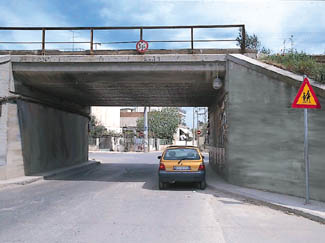
  1. No. 1
    Picture of question 1

    If you wish to stop here for a few minutes, are you allowed to do it?

    1. AYES
    2. BNO

    Right answer: B. An official question of the Ministry, in its official translation.
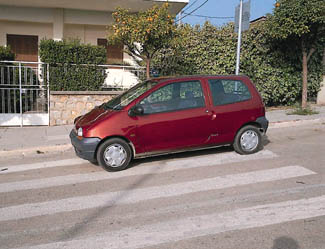
  2. No. 2
    Picture of question 2

    No traffic sign is prohibiting you from parking. Can you park thus?

    1. AYES
    2. BNO

    Right answer: B. An official question of the Ministry, in its official translation.
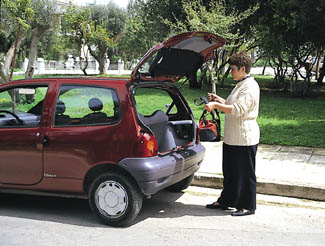
  3. No. 3
    Picture of question 3

    When you leave your car along the pavement, the time needed for loading or unloading your luggage is:

    1. AA waiting time.
    2. BA parking time.

    Right answer: A. An official question of the Ministry, in its official translation.
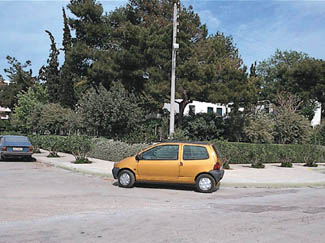
  4. No. 4
    Picture of question 4

    Waiting at this point is:

    1. AAcceptable if short.
    2. BNot recommended.
    3. CDangerous.

    Right answer: C. An official question of the Ministry, in its official translation.
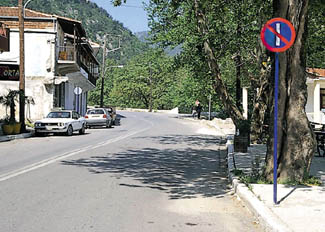
  5. No. 8
    Picture of question 8

    Are you allowed to park along this pavement in the month of April?

    1. AYES
    2. BNO

    Right answer: A. An official question of the Ministry, in its official translation.
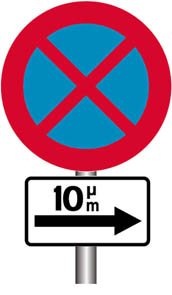
  6. No. 10
    Picture of question 10

    Are you allowed to park just on the right of the traffic sign in an array (vertically to the pavement), and why?

    1. ANo, because parking is forbidden at a distance of 10 m from this sign.
    2. BYes, because parking is forbidden after 10 m from this sign.

    Right answer: A. An official question of the Ministry, in its official translation.
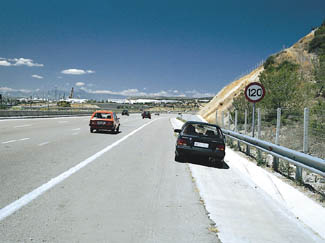
  7. No. 11
    Picture of question 11

    Waiting at this point is:

    1. AAcceptable if short.
    2. BNot recommended.
    3. CDangerous.

    Right answer: C. An official question of the Ministry, in its official translation.
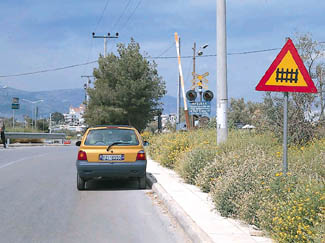
  8. No. 12
    Picture of question 12

    Waiting at this point is:

    1. AAcceptable, if short.
    2. BDangerous.
    3. CNot recommended.

    Right answer: B. An official question of the Ministry, in its official translation.
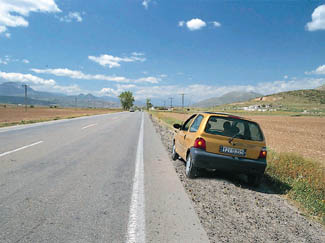
  9. No. 13
    Picture of question 13

    The parking of this vehicle is:

    1. AAllowed.
    2. BForbidden.

    Right answer: A. An official question of the Ministry, in its official translation.
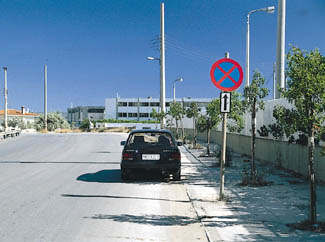
  10. No. 15
    Picture of question 15

    Has the private car, which has stopped on the right side of the road, violated the law?

    1. AYES
    2. BNO

    Right answer: A. An official question of the Ministry, in its official translation.
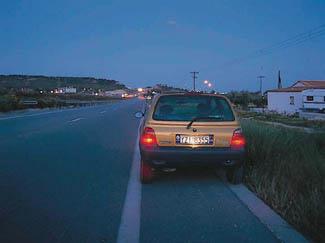
  11. No. 16
    Picture of question 16

    If you car has stopped thus, should the side lights be on?

    1. AIt is optional.
    2. BIt is compulsory.
    3. CIt is recommended.

    Right answer: B. An official question of the Ministry, in its official translation.
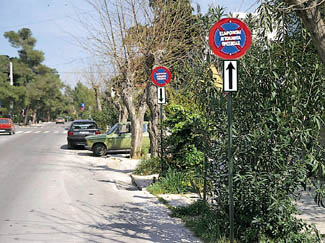
  12. No. 18
    Picture of question 18

    On which part of the road is parking allowed?

    1. ABetween the traffic signs.
    2. BOn a part other than that defined by the traffic signs.

    Right answer: B. An official question of the Ministry, in its official translation.
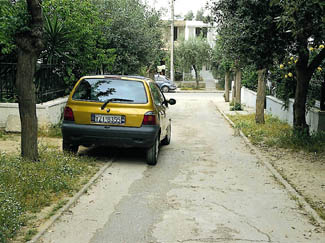
  13. No. 19
    Picture of question 19

    No traffic signs prohibit you from parking. Are you allowed to park thus?

    1. AYES
    2. BNO

    Right answer: B. An official question of the Ministry, in its official translation.
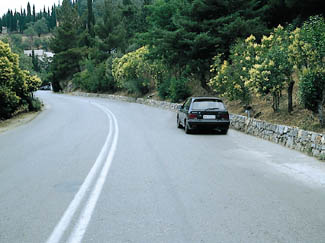
  14. No. 20
    Picture of question 20

    There is no yellow line on the pavement. Is the passenger car properly parked?

    1. AYES
    2. BNO

    Right answer: B. An official question of the Ministry, in its official translation.
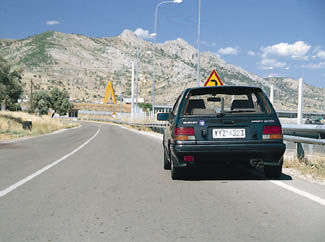
  15. No. 21
    Picture of question 21

    Is this car properly parked?

    1. AYES
    2. BNO

    Right answer: B. An official question of the Ministry, in its official translation.
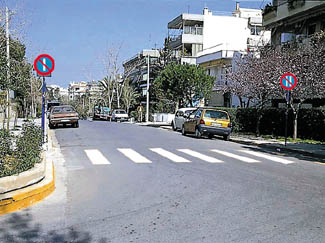
  16. No. 22
    Picture of question 22

    You intend to park on the road of the picture one day of February. Which side of the road will you choose?

    1. AThe left one.
    2. BThe right one.

    Right answer: A. An official question of the Ministry, in its official translation.
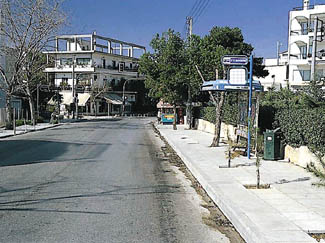
  17. No. 23
    Picture of question 23

    At which point are you permitted to park?

    1. AAt a distance of over 12 m from the bus-stop.
    2. BAt a distance of over 5 m from the bus-stop.
    3. CAt any position other than in front of the bus-shelter

    Right answer: A. An official question of the Ministry, in its official translation.
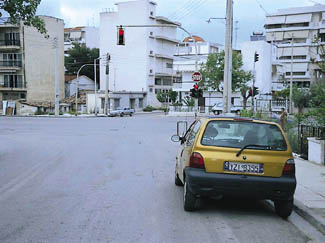
  18. No. 24
    Picture of question 24

    The distance of a passenger car from the traffic lights of the picture is 15 m. Is parking allowed at the point the car is?

    1. AYES
    2. BNO

    Right answer: B. An official question of the Ministry, in its official translation.
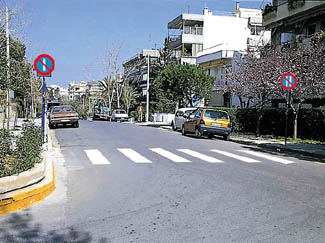
  19. No. 25
    Picture of question 25

    You intend to park in the road of the picture on one day in July. Which side of the road should you choose?

    1. AThe left one.
    2. BThe right one.

    Right answer: B. An official question of the Ministry, in its official translation.
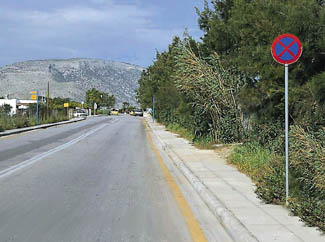
  20. No. 26
    Picture of question 26

    Why are you not allowed to stop on the right part of the street?

    1. ABecause it is a two-way street.
    2. BBecause there is a traffic sign that prohibits waiting and parking as well as a continuous yellow line at the edge of the street.

    Right answer: B. An official question of the Ministry, in its official translation.

  21. No. 27

    In an one-way street, if the width of the street is sufficient, can you park on the left as well?

    1. AYES
    2. BNO

    Right answer: A. An official question of the Ministry, in its official translation.

  22. No. 28

    You have immobilised your vehicle in front of a post office to buy stamps:

    1. AThis is an intended waiting.
    2. BThis is an intended parking.

    Right answer: B. An official question of the Ministry, in its official translation.

  23. No. 29

    A continuous yellow line at the edges of the pavement:

    1. AIndicates the prohibition of parking, but allows you to stop for a few minutes.
    2. BStresses that both waiting and parking are forbidden.

    Right answer: B. An official question of the Ministry, in its official translation.

  24. No. 30

    At what distance from a bus-stop are you allowed to park your vehicle?

    1. AAt a distance of over 5 m.
    2. BAt a distance of over 10 m.
    3. CAt a distance of over 12 m.

    Right answer: C. An official question of the Ministry, in its official translation.

  25. No. 31

    When you park your passenger car at night in a street which is not sufficiently lit, which lights should you leave on?

    1. AThe light of the rear number plate.
    2. BThe rear side lights.
    3. CThe front and rear side lights or parking light which is on the part of the traffic.

    Right answer: C. An official question of the Ministry, in its official translation.

  26. No. 32

    At what distance from a crossroads are you allowed to park your vehicle?

    1. AAt a distance of at least 1 m from the pedestrian crossing.
    2. BAt a distance of over 10 m from the imaginary extension of the closest borderline of the vertical road.
    3. CAt a distance of at least 15 m from the centre of the crossroads.

    Right answer: B. An official question of the Ministry, in its official translation.

  27. No. 34

    At what distance from the traffic lights are you allowed to park your vehicle?

    1. AAt a distance of over 5 m.
    2. BAt a distance of over 10 m.
    3. CAt a distance of over 20 m.

    Right answer: C. An official question of the Ministry, in its official translation.

  28. No. 35

    At what distance before and after a level railway crossing are you permitted to park your vehicle?

    1. AAt a distance of over 10 m.
    2. BAt a distance of over 15 m.
    3. CAt a distance of over 5 m if the crossing is guarded and of over 20 m if it is not guarded.

    Right answer: B. An official question of the Ministry, in its official translation.

  29. No. 36

    In which case is car parking allowed next to another car parked legally along the road?

    1. AWhen it is an one-way street and has at least three lanes.
    2. BWhen the road is not busy.
    3. COnly if permitted by a special traffic sign.

    Right answer: C. An official question of the Ministry, in its official translation.

  30. No. 37

    At what distance from a fire hydrant are you allowed to park your vehicle?

    1. AAt a distance of over 2 m.
    2. BAt a distance of over 5 m.
    3. CThere is no limitation.

    Right answer: B. An official question of the Ministry, in its official translation.

  31. No. 38

    At which position in an one-way street is parking of vehicles allowed, if there is no prohibiting traffic sign?

    1. AOnly on the right end of the road.
    2. BOnly on the left end of the road.
    3. COn both the left and right ends of the road.

    Right answer: C. An official question of the Ministry, in its official translation.

  32. No. 39

    In which case are you allowed to park your vehicle on the pavement?

    1. AWhen the width of the pavement is over 3,5 m.
    2. BWhen the part of the pavement where you will park is in front of your house or your shop.
    3. COnly when it is permitted by a special sign.

    Right answer: C. An official question of the Ministry, in its official translation.

  33. No. 40

    In which of the following positions are you prohibited from parking your vehicle?

    1. AAt a distance of over 20 m from traffic lights.
    2. BOn curves.
    3. CAt a distance of over 12 m from bus-stops.

    Right answer: B. An official question of the Ministry, in its official translation.

  34. No. 41

    What must you do when you park your car in a road that has no pavements?

    1. ANot park in front of house or shop entrances.
    2. BPark your car as close to the building line as possible.
    3. CLeave free space, with a width of at least 1 m, for the pedestrians.

    Right answer: C. An official question of the Ministry, in its official translation.

  35. No. 43

    In order to move off safely from a place of parking, your last action must be to:

    1. ASwitch on the indicator.
    2. BLook obliquely over your shoulder.
    3. CGive an arm signal.

    Right answer: B. An official question of the Ministry, in its official translation.

  36. No. 44

    You wish to leave your vehicle parked on a road. Can you leave the engine on until you come back?

    1. AOnly if you park for less than 5 minutes.
    2. BSo as to charge a battery.
    3. CNo, not in any circumstances.

    Right answer: C. An official question of the Ministry, in its official translation.

  37. No. 45

    You are parking your vehicle on the side of a road, with the front part on an uphill. You must apply the handbrake and:

    1. ASelect the reverse gear.
    2. BSelect the neutral gear.
    3. CSelect the first gear.

    Right answer: C. An official question of the Ministry, in its official translation.

  38. No. 47

    You are parking your vehicle on the side of a road with the rear part on an uphill. You must apply the handbrake and:

    1. ASelect the reverse gear.
    2. BSelect the neutral gear.
    3. CSelect the first gear.

    Right answer: A. An official question of the Ministry, in its official translation.

  39. No. 50

    In a parking meter there is still parking time from the car that had parked earlier. What should you do if you wished to park there?

    1. AYou are not allowed to use the remaining time.
    2. BYou can use the remaining time without handling the clock anew.

    Right answer: B. An official question of the Ministry, in its official translation.

  40. No. 51

    In a two-way street parking on its right and left side, parallelly to the street axis, is not forbidden. Where are you allowed to park?

    1. AOn the right and left of your course.
    2. BOnly on the right of your course.

    Right answer: B. An official question of the Ministry, in its official translation.

  41. No. 52

    What is the minimum distance you should keep when parking or stopping before a pedestrian crossing?

    1. A1 m.
    2. B5 m.
    3. C12 m.

    Right answer: B. An official question of the Ministry, in its official translation.

  42. No. 53

    In which cases are you recommended to switch on the side lights at night?

    1. AWhen the car is parked outside a residential area.
    2. BWhen you are driving in roads which have continuous and sufficient lighting.

    Right answer: A. An official question of the Ministry, in its official translation.

Other chapters