τεστ σήματα
Chapter 17 of 25

Driving with reduced grip

12 questions from the official bank with the right answer, in the order of the manual.

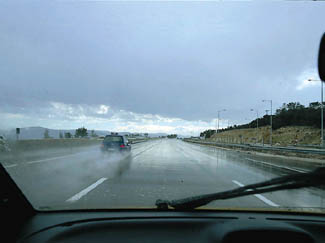
  1. No. 3
    Picture of question 3

    In order to avoid aquaplaning:

    1. ADrive at a reduced speed.
    2. BDrive in a high gear.

    Right answer: A. An official question of the Ministry, in its official translation.
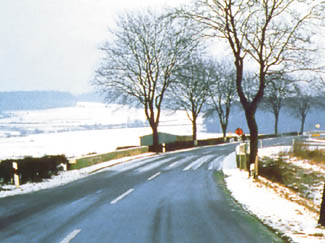
  2. No. 4
    Picture of question 4

    The ice:

    1. AHas usually been distributed uniformly on the road.
    2. BIs formed mainly in mountainous areas, on bridges and near water currents.
    3. CIs formed mainly in foggy days.

    Right answer: B. An official question of the Ministry, in its official translation.

  3. No. 8

    The tyre grip on a wet road is reduced when compared to a dry road, by:

    1. A25%.
    2. B50%.
    3. C75%.

    Right answer: B. An official question of the Ministry, in its official translation.

  4. No. 9

    Aquaplaning occurs:

    1. AWhen you throw road water to the other users.
    2. BWhen your vehicle slips on a layer of road water.

    Right answer: B. An official question of the Ministry, in its official translation.

  5. No. 10

    What should you do when tyre grip on the road is reduced?

    1. ASlow down and avoid abrupt movements through the steering-wheel.
    2. BRestrict the speed of your car to 50 km/h.

    Right answer: A. An official question of the Ministry, in its official translation.

  6. No. 11

    What dangers are created due to aquaplaning?

    1. AThe vehicle develops a higher speed.
    2. BThe steering-wheel becomes “heavy” (it will not turn easily).
    3. CYou cannot steer the vehicle through the steering-wheel and brake safely.

    Right answer: C. An official question of the Ministry, in its official translation.

  7. No. 12

    You are accelerating your car very harshly and it starts skidding. The first thing you should do is to:

    1. ARelease the accelerator.
    2. BBrake softly.
    3. CBrake harshly.

    Right answer: A. An official question of the Ministry, in its official translation.

  8. No. 14

    Why must safety distance be longer when it starts raining?

    1. AIt is very likely that due to the dirt existing on the road a dangerous layer of sludge may be created on the road, which may increase braking distance.
    2. BBraking distance is reduced.
    3. CVisibility is increased.

    Right answer: A. An official question of the Ministry, in its official translation.

  9. No. 15

    Frozen roads are often more slippery:

    1. AWhen it starts snowing.
    2. BAt the beginning of spring.
    3. CWhen the snow starts thawing.

    Right answer: C. An official question of the Ministry, in its official translation.

  10. No. 17

    After a long dry spell a road may be more slippery:

    1. AWhen it starts raining.
    2. BAfter a two-hour raining.
    3. CWhen it stops raining.

    Right answer: A. An official question of the Ministry, in its official translation.

  11. No. 18

    You feel that the rear wheels of your car are sliding to the right. In order to correct this sliding you should:

    1. ATurn the steering-wheel to the left.
    2. BBrake and hold the steering-wheel firmly.
    3. CTurn the steering-wheel to the right.

    Right answer: C. An official question of the Ministry, in its official translation.

  12. No. 22

    You are moving in a straight road at a high speed. Which part of the car will lower if you slow down abruptly?

    1. ANone.
    2. BThe front part.
    3. CThe rear part.

    Right answer: B. An official question of the Ministry, in its official translation.

Other chapters